
- Wilkinson became one of the first Black women to perform with a major ballet company, transforming the art form.
- She faced discrimination but persisted, later advocating for greater access and opportunities for dancers of color.
- Wilkinson’s legacy lives on through the dancers she mentored and the more inclusive ballet world she helped create.
Welcome back to BOSSIP’s Black History Hidden Gems, our weekly Black History Month series dedicated to highlighting overlooked Black figures, moments, and milestones. This series spotlights stories that history tried to erased, but legacy refused to forget.
Anne Raven Wilkinson was a trailblazing ballerina whose life and career helped transform American ballet as we know it. At a time when classical dance was largely closed to Black performers, Wilkinson broke barriers with quiet determination, artistic excellence, and an unwavering belief in her right to belong on the world’s most prestigious stages.
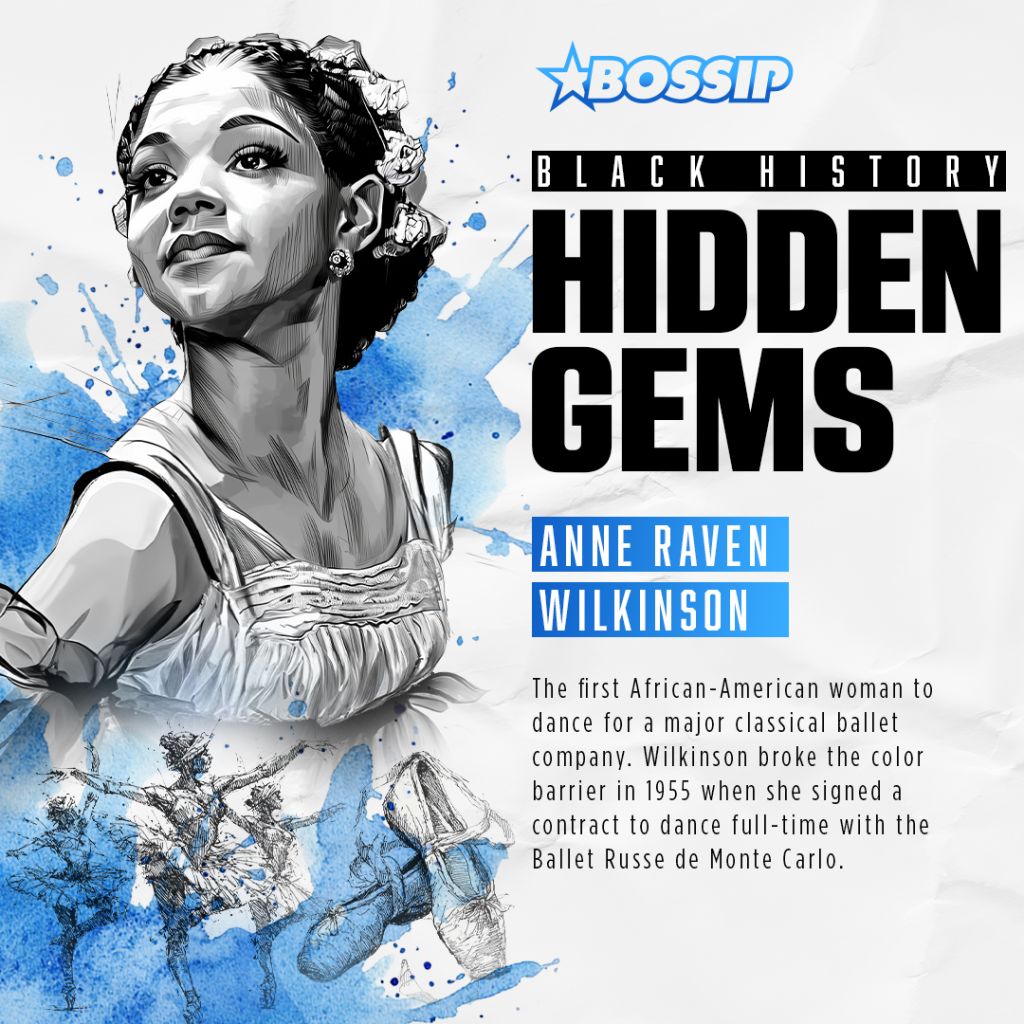
Born in 1935 in New York City, Wilkinson grew up during an era when segregation shaped nearly every aspect of American life. As a child, she became captivated by ballet after seeing performances on television and in theaters. Yet, even as her passion grew, she quickly became aware that ballet was not designed with dancers like her in mind–Major companies were overwhelmingly white, and the opportunities for Black students were limited, if any.
Still, Wilkinson persisted. She took her training seriously from a young age, studying technique and dedicating herself to the rigorous standards of classical ballet. Her talent was unmistakable, and her teachers recognized her discipline and musicality as she steadily developed into a refined dancer. In a world that often told her “no,” she chose to answer with something that couldn’t be ignored: her talent.
Her breakthrough came in 1955, when she joined the prestigious Ballet Russe de Monte Carlo. At the time, it was one of the most prominent ballet companies in the United States, touring widely and shaping American audiences’ understanding of classical dance. By becoming one of the first Black women to perform with a major, predominantly white ballet company, Wilkinson made history, forever changing the world of ballet.
However, this huge achievement came at a cost. Touring in the segregated South meant she was sometimes barred from performing or forced to stay behind while the company traveled. Hotels, restaurants, and venues often refused her service, facing discrimination not only from society at large, but within the professional world she had worked so hard to get a spot in. Nevertheless, she continued to dance with grace and professionalism, refusing to allow prejudice to diminish her artistry.
After several years with Ballet Russe, Wilkinson eventually left the company and shifted her focus toward another passion project. Rather than stepping away from dance, she redirected her energy toward education, community engagement, and advocacy. Having been through so much in her own life, she understood that true change would not come from individual success alone, but from building pathways for others.
In her later years, one of her most important affiliations was with the Dance Theatre of Harlem, a company founded to create opportunities for dancers of color. Wilkinson worked as a teacher, coach, and mentor there, helping shape young artists who might otherwise have been denied access to high-level ballet training.
Wilkinson also became deeply involved in preserving dance history. She recognized that many Black dancers’ stories had been ignored or forgotten, and she was determined to stop that cycle. She participated in oral history projects, collaborated with cultural institutions, and documented the experiences of dancers who had navigated racism and exclusion. In doing so, she helped ensure that future generations would understand both the struggles and triumphs of earlier pioneers, all of whom got them where they are today.
Wilkinson’s influence can be seen in the success of later generations, including dancers such as Misty Copeland, who benefited from the doors opened by earlier trailblazers. While each generation faces its own challenges, Wilkinson’s career helped lay the foundation for a more inclusive ballet world.
She passed away in 2018, leaving behind a legacy that extends far beyond titles or accolades. Her achievements were not measured only in performances, but in possibilities created. She expanded the definition of who could be a ballerina and challenged institutions to confront their biases. She also nurtured young artists who would carry the art form forward far after her passing.
Anne Raven Wilkinson was never afraid to enter spaces that were not built for her, showcasing her artistry as an act of resistance. She met injustice with dignity and, by doing so, she reshaped American ballet from within.
Today, her story stands as a reminder that cultural change often begins with individuals who dare to imagine themselves where they have been told they do not belong. Through her own experiences as a dancer, and later instructing other who look like her, Wilkinson transformed ballet into a more open, honest, and humane art form.
Leave a Reply